How to Spot Hidden Sugars in Food
In brief
How can you spot hidden sugar in packaged foods?
Sugar appears on ingredient labels under many names, including high fructose corn syrup, dextrose, maltose, sucrose, fructose and agave nectar, and foods like flavored yogurt, granola bars, tomato sauce, salad dressings, protein bars and instant oatmeal often contain surprising amounts. To read labels like a pro, check the added sugars line, remember ingredients are listed by weight, convert grams to teaspoons by dividing by four, and watch for small serving sizes that make sugar content look lower than it is.
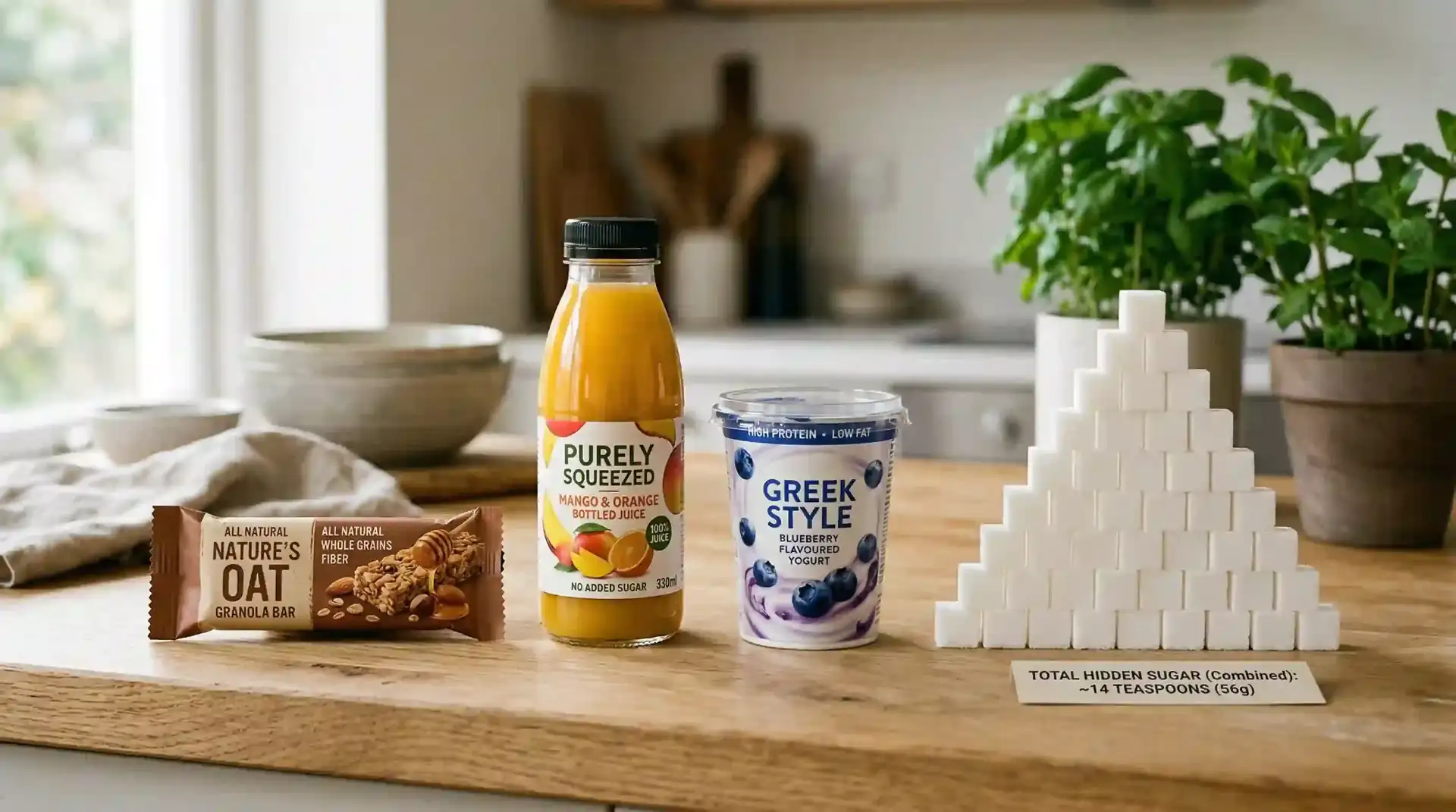
Sugar hides in many "healthy" foods under different names. Learning to identify these hidden sugars is crucial for managing your intake and improving your health.
Sugar Goes by Many Names
Look for these terms on ingredient labels, they're all forms of added sugar:
Surprising Sources of Hidden Sugar
Flavored Yogurt
19-26g per serving (4-6 teaspoons)Granola Bars
10-20g per bar (2.5-5 teaspoons)Tomato Sauce
6-12g per half cup (1.5-3 teaspoons)Salad Dressings
5-8g per 2 tablespoons (1-2 teaspoons)Protein Bars
15-25g per bar (4-6 teaspoons)Instant Oatmeal
10-15g per packet (2.5-4 teaspoons)How to Read Labels Like a Pro
- Check "Added Sugars": Look for this line on the nutrition label, it shows sugar that doesn't occur naturally in the food.
- Read Ingredients: Ingredients are listed by weight. If sugar is in the first 3 ingredients, the product is high in sugar.
- Do the Math: 4 grams of sugar = 1 teaspoon. The WHO recommends limiting added sugar to 25g (6 teaspoons) per day.
- Watch Serving Sizes: Manufacturers often use small serving sizes to make sugar content look lower.
Need help reducing sugar? Get a personalized low-sugar meal plan that doesn't sacrifice taste.
Book a Free Consultation →