PCOS/PCOD Management Program

PCOS affects 1 in 5 Indian women, yet most receive generic weight loss advice that fails because it ignores the hormonal root cause. Our program targets insulin resistance, inflammation, and androgen excess through evidence-based nutrition specifically designed for the Indian PCOS patient.

Start Your Journey

What You'll Get

  • Insulin resistance-targeted Indian meal plans
  • Anti-inflammatory diet protocols with therapeutic spices
  • Androgen-reducing food strategies (zinc, omega-3, spearmint)
  • Fertility-supportive nutrition (when planning conception)
  • Menstrual cycle regulation through dietary interventions
  • Weight management designed for PCOS metabolism (not generic deficits)
  • PCOS-type assessment (inflammatory, insulin-resistant, adrenal)

Yoga + Nutrition: Combine daily live yoga sessions with a personalized meal plan from clinical dietitian Jyoti Singh, a complete approach to lasting health.

Book Free Consultation

Why Generic Diets Fail for PCOS

PCOS is not primarily a weight problem, it's a hormonal and metabolic disorder where insulin resistance drives excess androgen production. 70-80% of women with PCOS have insulin resistance regardless of weight. This means standard calorie-deficit diets often fail because they don't address the underlying insulin dysfunction. You can be lean and still have insulin-resistant PCOS.

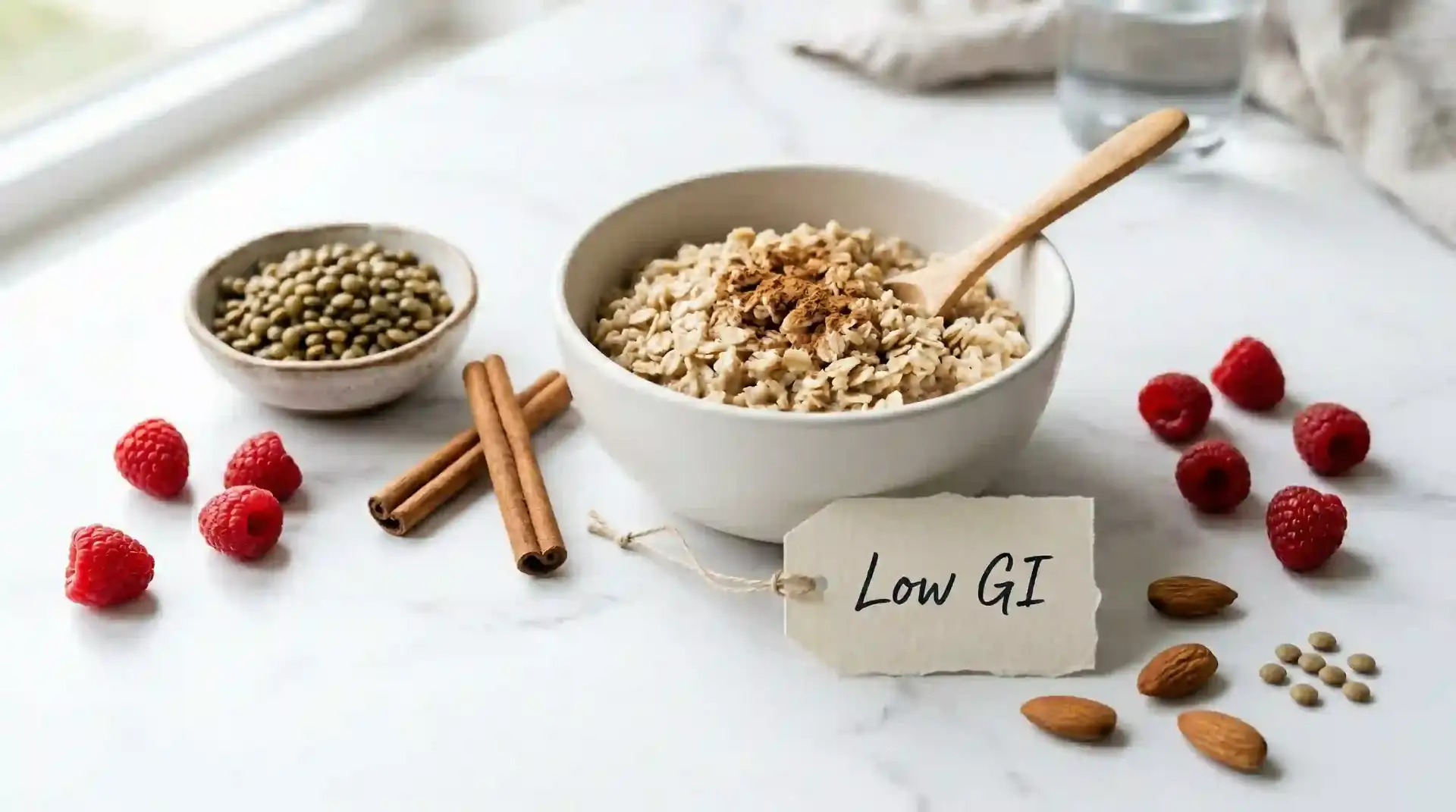
Research shows that low-GI diets improve insulin sensitivity, reduce testosterone levels, and restore ovulation in PCOS more effectively than standard low-calorie diets. The dietary approach must prioritize insulin management first, with weight loss as a secondary (and often automatic) outcome. ICMR guidelines recommend complex carbohydrates from millets and whole grains over refined options.

Anti-inflammatory foods are critical because PCOS involves chronic low-grade inflammation that worsens insulin resistance and androgen production. Indian spices like turmeric (curcumin), ginger, and cinnamon have demonstrated anti-inflammatory and insulin-sensitizing properties in clinical trials. Indian cuisine is uniquely positioned for PCOS management because of its spice-rich cooking tradition.

Use our PCOS Risk Calculator to understand your PCOS type and get personalized macro recommendations. Read our detailed PCOS Diet Guide for a comprehensive food-by-food breakdown. Also see our guide on PCOS and Insulin Resistance for the science behind the insulin-PCOS connection.

Our 4-Step Approach

A clinically-grounded methodology designed for the unique hormonal landscape of PCOS

1

PCOS-Type Assessment

Identifying your PCOS type (insulin-resistant, inflammatory, adrenal, or post-pill), current symptoms, hormonal profile (AMH, testosterone, DHEA-S), and metabolic markers. We work with your gynecologist's reports.

2

Insulin-First Meal Planning

Low-GI Indian meals with therapeutic spices, designed to improve insulin sensitivity before focusing on calorie reduction. Includes inositol-rich and chromium-rich food strategies using Indian ingredients.

3

Hormonal Balance Protocols

Anti-inflammatory foods that help balance androgens, estrogen, and progesterone naturally. Gut health optimization through fermented Indian foods (curd, buttermilk, idli/dosa batter).

4

Cycle & Fertility Tracking

Dietary adjustments across your menstrual cycle phases, with specific fertility-supportive nutrition protocols when planning conception.

Your Success Path

From first click to personalized PCOS plan, it's simpler than you think

2 min

Assessment

PCOS symptom questionnaire

45 min

Expert Consultation

One-on-one with Jyoti Singh

24 hrs

Customized Plan

Your PCOS-specific meal plan

Sample 7-Day PCOS-Friendly Indian Meal Plan

~1,400-1,600 calories, low-GI, anti-inflammatory. Adjusted based on your PCOS type, weight, and goals.

Day 1, Monday

  • Breakfast: Ragi dosa (2) + sambar + green tea with cinnamon
  • Mid-morning: 10 almonds + 1 small apple
  • Lunch: 2 jowar rotis + palak dal + mixed veg sabzi + curd + salad (eat salad first)
  • Evening: Spearmint tea + roasted makhana (small handful)
  • Dinner: Quinoa khichdi + cucumber raita

Day 2, Tuesday

  • Breakfast: Moong dal cheela (2) + mint chutney + flaxseed smoothie
  • Mid-morning: 1 pear + 4 walnuts
  • Lunch: 1 cup brown rice + chana masala + bhindi sabzi + salad (eat salad first)
  • Evening: Green tea + sprouts chaat
  • Dinner: 2 bajra rotis + mixed dal + tori sabzi

Day 3, Wednesday

  • Breakfast: Overnight oats with chia seeds, berries, and almond butter
  • Mid-morning: 1 guava + 5 almonds
  • Lunch: 2 multigrain rotis + rajma + lauki sabzi + salad (eat salad first)
  • Evening: Cinnamon tea + small handful pumpkin seeds
  • Dinner: Vegetable soup + grilled paneer with stir-fry vegetables

Day 4, Thursday

  • Breakfast: Besan chilla with spinach (2) + curd + green tea
  • Mid-morning: 1 orange + mixed seeds (1 tbsp)
  • Lunch: 2 ragi rotis + dal tadka + gobi sabzi + salad (eat salad first)
  • Evening: Spearmint tea + roasted chana
  • Dinner: Vegetable daliya + raita

Day 5, Friday

  • Breakfast: Idli (2) + sambar + flaxseed chutney
  • Mid-morning: 1 small banana + 4 walnuts
  • Lunch: 1 cup brown rice + fish/tofu curry + beans sabzi + salad (eat salad first)
  • Evening: Green tea + dates (2) + almonds (4)
  • Dinner: 2 phulkas + palak paneer (low oil) + curd

Day 6, Saturday

  • Breakfast: Vegetable poha with peanuts and turmeric + buttermilk
  • Mid-morning: 1 apple + pumpkin seeds (1 tbsp)
  • Lunch: 2 jowar rotis + kadhi + cabbage sabzi + salad (eat salad first)
  • Evening: Herbal tea + roasted peanuts (small handful)
  • Dinner: Mixed vegetable soup + ragi roti (1)

Day 7, Sunday

  • Breakfast: 1 multigrain paratha + curd + green tea with cinnamon
  • Mid-morning: Mixed berries + 5 almonds
  • Lunch: 1 cup brown rice + chicken/chole curry + bhindi sabzi + salad (eat salad first)
  • Evening: Spearmint tea + makhana
  • Dinner: Vegetable khichdi + raita

Important: This is a generic PCOS template. Your PCOS type (insulin-resistant, inflammatory, adrenal) determines which modifications are needed. A plan for insulin-resistant PCOS differs significantly from adrenal PCOS. Book a free consultation for a personalized plan.

Foods to Eat and Foods to Avoid

PCOS-Supportive Indian Foods

  • Anti-inflammatory spices: turmeric (haldi), ginger (adrak), cinnamon (dalchini), fenugreek (methi)
  • Low-GI grains: jowar, bajra, ragi, oats, quinoa, brown rice
  • Omega-3 sources: walnuts, flaxseeds, chia seeds, fatty fish (salmon, sardines)
  • Spearmint tea: clinical evidence for reducing androgen levels in PCOS
  • Zinc-rich foods: pumpkin seeds, sesame seeds, chickpeas, lentils
  • Probiotic foods: homemade curd, buttermilk, kanji, fermented idli/dosa batter
  • Chromium sources: broccoli, green beans, whole grains, mushrooms

Foods That Worsen PCOS

  • Refined carbs and sugar: maida, white bread, biscuits, sweets, cold drinks (spike insulin rapidly)
  • High-GI foods: white rice in large portions, potatoes, instant noodles
  • Processed dairy in excess: full-fat milk, excessive paneer (may increase androgens in some women)
  • Trans fats: vanaspati, margarine, packaged snacks, fried street food
  • Caffeine excess: more than 2 cups/day can worsen cortisol and adrenal PCOS
  • Soy in large amounts: phytoestrogens may interfere with hormonal balance for some PCOS types
  • Artificial sweeteners: may worsen insulin response despite being 'zero calorie'

5 PCOS Diet Mistakes That Keep You Stuck

1. Following a generic 1200-calorie diet

Aggressive calorie restriction tanks metabolism and increases cortisol, both of which WORSEN PCOS symptoms. Start with 1,400-1,600 calories and focus on food quality (low-GI, anti-inflammatory) before reducing quantity. Your body needs enough fuel to produce hormones correctly.

2. Eliminating all carbs

Your brain needs glucose to function. Zero-carb diets increase cortisol production and often worsen adrenal PCOS. The fix is switching to LOW-GI carbs (millets, oats, brown rice), not removing carbs entirely. Complex carbohydrates actually help with serotonin production, which many PCOS patients need.

3. Ignoring gut health

Emerging research links gut dysbiosis directly to PCOS severity. The gut microbiome influences estrogen metabolism and insulin sensitivity. Probiotic foods (homemade curd, buttermilk, fermented batters) and prebiotic fiber (garlic, onion, banana) support the gut-hormone axis that's disrupted in PCOS.

4. Only focusing on weight loss

You can have lean PCOS, normal BMI but insulin resistant, irregular cycles, and acne. Treating weight as the only metric misses the hormonal root cause entirely. We track insulin markers, cycle regularity, skin/hair symptoms, and energy levels alongside weight. If weight IS your primary concern, see our weight loss program.

5. Not addressing stress and sleep

Cortisol directly worsens insulin resistance and androgen production. PCOS management without stress management is fundamentally incomplete. We include lifestyle protocols (sleep hygiene, stress-reducing foods, gentle exercise recommendations) alongside nutrition. See our thyroid nutrition program for related hormonal conditions that often coexist with PCOS.

Take Control of Your PCOS

Book a free 45-minute consultation with Jyoti Singh and get a PCOS management plan designed for YOUR specific type.

Book Free Consultation

Frequently Asked Questions

Common questions about PCOS nutrition and management