Managing Diabetes Through an Indian Diet: A Practical, No-Compromise Guide
In brief
How can Indians manage type 2 diabetes while eating traditional food?
Traditional Indian spices such as methi, karela, turmeric, cinnamon and ajwain have clinical evidence for helping lower blood sugar, and swapping white rice, maida roti and poha for lower-GI grains like jowar, bajra and ragi makes a meaningful difference. Eating meals in a specific sequence, starting with salad and fibre, then dal or protein, then vegetables, and eating roti or rice last, can blunt the blood sugar spike significantly. Portion control and sequencing matter more than eliminating rice or fruit entirely, and dietary change alone can meaningfully lower HbA1c at any stage of the disease.
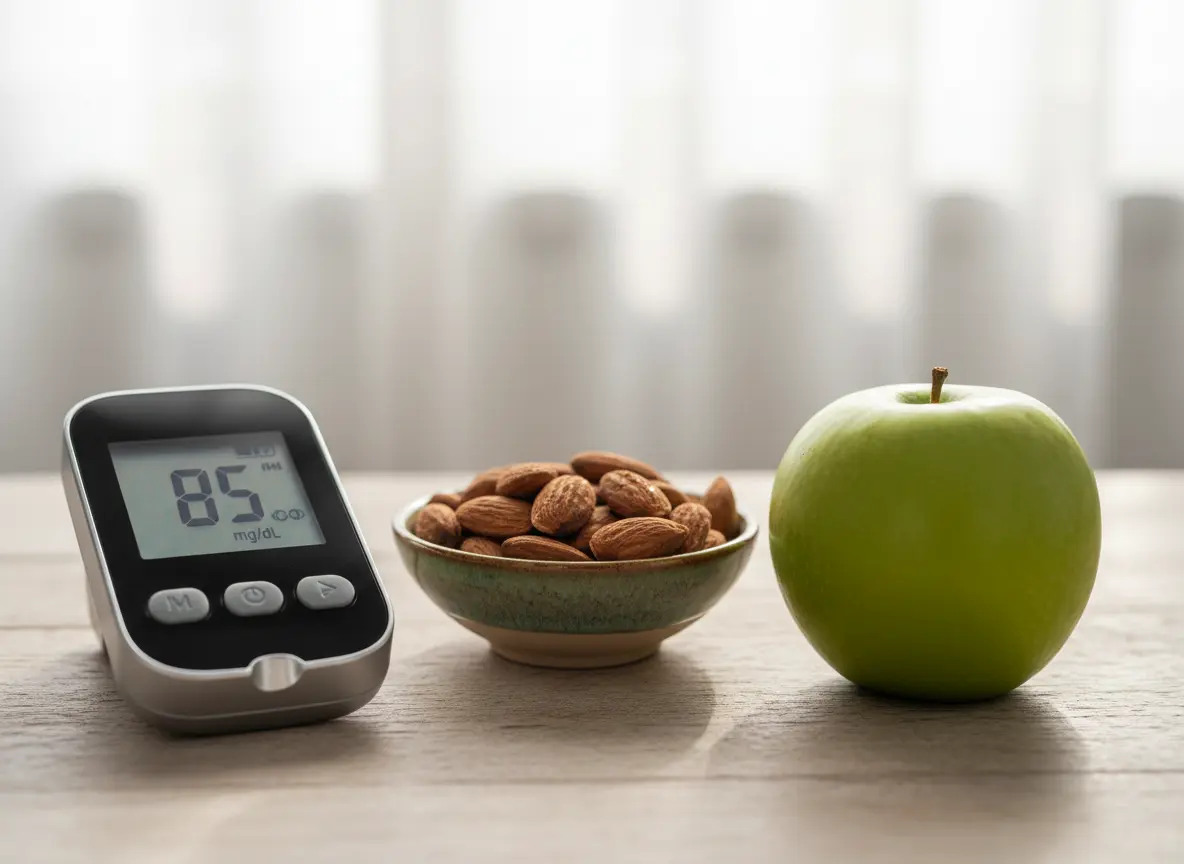
India has more people living with Type 2 diabetes than any other country, yet the standard dietary advice is built almost entirely on Western food patterns. Telling an Indian patient to "avoid rice" or "eat more salad" ignores the reality of how we cook, what our families eat, and what is affordable and accessible across different regions. This guide is different. It works with Indian food, not against it.
This article focuses on the practical "how" of eating Indian food with diabetes. For a foundational overview of diabetes types, GI principles, and foods to embrace or avoid, see our companion article Managing Diabetes Through Diet.
1. Your Spice Cabinet Is a Medicine Cabinet
Indian cuisine's most remarkable advantage for diabetics isn't its vegetables or grains, it's the spices. Several everyday Indian spices have clinical evidence for blood sugar lowering that rivals early-stage pharmaceutical interventions. Most Indians already have all five of these in their kitchen.
How it works
Contains galactomannan, a soluble fibre that slows glucose absorption. Also improves insulin sensitivity.
How to use it
Soak 1 tsp seeds overnight, drink the water on an empty stomach. Use leaves in sabzi and rotis.
Clinical evidence
Reduces fasting blood sugar by 10, 25% in clinical studies.
How it works
Contains charantin and polypeptide-P, compounds that mimic insulin action and reduce hepatic glucose production.
How to use it
Juice (small glass, 2, 3×/week) or sabzi. Best on an empty stomach.
Clinical evidence
One of the most studied functional foods for T2DM in Ayurvedic and modern research.
How it works
Curcumin reduces inflammatory cytokines (TNF-α, IL-6) that drive insulin resistance.
How to use it
Liberally in dals, curries, and milk. Best absorbed with a pinch of black pepper.
Clinical evidence
Daily curcumin supplementation reduced HbA1c in multiple RCTs.
How it works
Improves insulin receptor sensitivity and mimics insulin signalling pathways.
How to use it
Add ¼ tsp to morning chai (instead of sugar) or in khichdi seasoning.
Clinical evidence
Meta-analyses show meaningful reductions in fasting glucose and LDL cholesterol.
How it works
Thymol content improves pancreatic beta-cell function and reduces postprandial glucose spike.
How to use it
Roast and add to roti dough. Also aids digestion of heavy meals.
Clinical evidence
Emerging clinical data supports anti-hyperglycaemic effects.
2. The Grain Truth: What to Keep, What to Swap
The single most impactful dietary change most Indian diabetics can make isn't eliminating carbohydrates, it's switching which grains they eat. Traditional millets used across India for centuries have glycaemic index (GI) values far lower than wheat or rice, and are nutritionally superior in almost every category.
| Grain / Bread | GI | Rating | Practical Guidance |
|---|---|---|---|
| White rice (plain) | 72 | high | Mix with cauliflower rice (50:50), eat with dal and sabzi first |
| Brown / red rice | 55 | moderate | Good swap for white rice. Higher fibre slows glucose release. |
| Maida roti / naan | 70 | high | Replace with multigrain / jowar / bajra roti |
| Whole wheat roti (thin) | 49 | moderate | Acceptable in controlled portions (1, 2 rotis per meal) |
| Jowar (Sorghum) roti | 43 | low | Excellent, high fibre, rich in resistant starch |
| Bajra (Pearl millet) roti | 41 | low | Best winter grain for diabetes, high Mg, zinc, and fibre |
| Ragi (Finger millet) roti | 38 | low | Exceptional, also high in calcium and polyphenols |
| Poha (beaten rice) | 71 | high | Add lots of vegetables and a handful of peanuts to blunt the spike |
| Oats (rolled) | 55 | moderate | Savory oats khichdi is excellent, avoid sweet/packaged variants |
The millet revival is your greatest advantage
Jowar, bajra, and ragi were staple grains in India for thousands of years before polished wheat and refined rice became the default. Switching back to 50, 70% millets is not a restriction, it is a return to what the body evolved to process well.
3. The Meal Sequence Method: Eating the Same Food, Differently
One of the most powerful, and least-known, diabetes management strategies requires no food substitutions. Research consistently shows that the order in which you eat the components of a meal determines a significant portion of the blood sugar response, independent of what you eat. In a traditional Indian thali, this order is easy to apply:
Salad & Fibre
Start with raw salad (cucumber, tomato, onion, greens). Fibre creates a viscous layer in the gut that physically slows glucose absorption from everything eaten after.
Dal / Protein
Eat your dal, curd, egg, or paneer next. Protein triggers early GLP-1 secretion (the same mechanism as expensive diabetes drugs), which pre-stimulates insulin before carbs arrive.
Sabzi (Vegetables)
Non-starchy vegetables eaten mid-meal further dilute the glycaemic load of the grains you'll eat next.
Roti / Rice (last)
By eating carbohydrates last, the fibre-protein-vegetable matrix in your gut dramatically reduces the blood sugar spike, studies show up to 30, 40% lower peak glucose vs eating carbs first.
4. A Practical Indian Meal Plan for Diabetes
The following are realistic options for an Indian household. These are not "diet food", they are normal, delicious Indian meals structured for blood sugar control.
🌅 Breakfast Options(7:00, 8:30 AM)
Methi Moong Cheela
2 cheelas + mint chutney + curd
Savory Oats Khichdi
Rolled oats cooked with vegetables and a tadka of ajwain
Ragi Dosa with Sambar
Fermentation lowers GI further. Avoid coconut chutney if watching fats.
Besan Chilla
Add grated lauki or spinach for volume without carbs
Boiled Egg + Multigrain Roti
Quick, portable, and keeps blood sugar stable for 4+ hours
Mid-Morning Snack (10:30, 11:00 AM)
A handful of roasted chana, 2 small guavas, a cup of unsweetened lassi, or 10, 12 soaked almonds. Avoid biscuits, namkeen, or packaged snacks even if labelled "diabetic-friendly."
☀️ Lunch Options(12:30, 2:00 PM)
Bajra Roti + Dal Palak + Salad
Eat in sequence: salad → dal → roti
Jowar Khichdi with Vegetables
Use minimal ghee. Add a side of raw cucumber raita.
Brown Rice + Rajma + Lauki Sabzi
Beans significantly blunt the GI of rice when eaten together
Quinoa Pulao + Curd
Add peas, carrot, beans for colour and fibre
🌙 Dinner Options(6:30, 7:30 PM, earlier is better)
Soup + Ragi Roti + Sabzi
Keep dinner before 7 PM for optimal overnight glucose regulation
Dal + 1 Jowar Roti + Salad
Reduce roti count at dinner, insulin sensitivity declines in the evening
Grilled Fish/Paneer + Stir-fry Vegetables
Excellent low-carb dinner option, especially if lunch was grain-heavy
5. When You Eat Matters Almost As Much As What You Eat
Insulin sensitivity follows a circadian rhythm. Your body is most sensitive to insulin in the morning and least sensitive in the evening. This has direct, practical implications:
- 🕗Eat your largest meal at lunch, not dinner. The same amount of rice causes a significantly lower glucose response at noon than at 8 PM.
- 🌙Finish dinner by 7:00, 7:30 PM. Studies show that late-night eating (after 9 PM) causes blood sugar to remain elevated through the night, worsening HbA1c over time.
- 🕐Aim for a 12-hour eating window minimum (e.g., breakfast at 7 AM, dinner by 7 PM). Overnight fasting of 12+ hours consistently improves insulin sensitivity.
- 🫖Start the morning with methi water or lukewarm water with ½ tsp haldi before your first meal, not chai with sugar.
6. Debunking 5 Common Indian Diabetes Diet Myths
Misinformation about diabetes and food is widespread, often passed along by well-meaning family members or outdated health content. Here are the five myths our dietitians hear most often:
"Fruits are full of sugar, diabetics must avoid them."
Whole fruits contain fibre that slows glucose absorption, their glycaemic load (GL) is much lower than their GI suggests. Berries, guava, jamun, and amla are particularly beneficial. Avoid fruit juices.
"Rice is poison for diabetes, switch to roti only."
The issue is quantity and context, not rice per se. A small portion of rice eaten after dal and sabzi causes a far smaller spike than the same amount eaten alone first. Portion control matters more than elimination.
"Jaggery and honey are safe sugar alternatives for diabetics."
Both raise blood glucose just as effectively as refined sugar. Jaggery has trace minerals but the glycaemic impact is nearly identical. Use in very small amounts only, they are not "free foods."
"Diabetics need special diabetic biscuits and health drinks."
Most "diabetic" packaged foods are highly processed, contain maltitol or fructose (which still raise glucose), and are considerably more expensive. Real whole foods are always superior.
"Once on medication, diet doesn't matter as much."
Diet remains the most powerful intervention at every stage of T2DM. Multiple studies show that intensive dietary change can reduce HbA1c by 1, 2%, comparable to adding a second medication, at any stage of the disease.
A Note from Our Dietitians
The strategies in this article are evidence-based, but diabetes is highly individual. Your response to specific foods, the best grain ratios for your particular HbA1c target, and optimal meal timing will vary based on your current medications, activity levels, and metabolic profile. A personalized plan from a registered dietitian will always outperform a generic one.
Book a Free Consultation