Managing Potassium & Phosphorus
In brief
How can people with kidney disease manage potassium and phosphorus intake?
High potassium can cause dangerous heart rhythm problems and high phosphorus pulls calcium from bones and damages blood vessels, so people with kidney disease often need to limit potassium to 2,000 to 3,000 mg daily and watch high-potassium foods like bananas, potatoes, oranges, tomatoes, spinach and avocados. Leaching vegetables in water can cut their potassium content by 50 to 75 percent, and checking labels for phosphorus additives, which are hidden in many processed foods, helps control phosphorus intake alongside choosing fresher, less processed proteins.
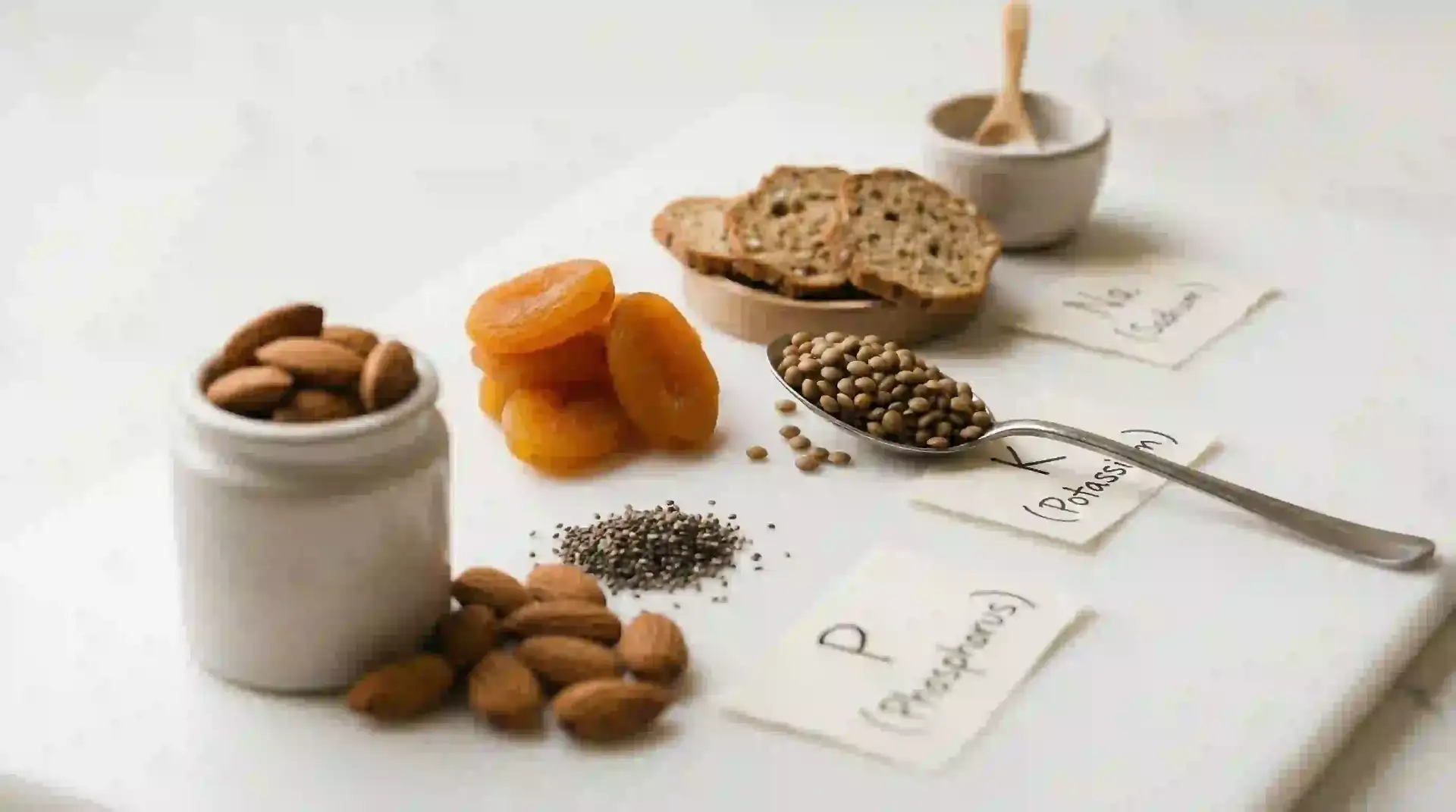
For people with kidney disease, managing potassium and phosphorus is crucial. These minerals, healthy for most people, can build up to dangerous levels when kidneys can't filter them properly. This guide provides practical strategies for keeping these minerals in balance.
Why These Minerals Matter
- • High Potassium: Can cause dangerous heart rhythm problems
- • High Phosphorus: Pulls calcium from bones, causing weakness; damages blood vessels
Understanding Potassium Levels in Foods
Daily potassium is often limited to 2,000-3,000 mg for CKD patients. Here are common high-potassium foods:
422 mg per medium banana
926 mg per medium potato
237 mg per orange
292 mg per medium tomato
167 mg per cup raw
690 mg per avocado
Smart Potassium Swaps
💡 Similar sweetness, much lower potassium
💡 Can mash cauliflower as substitute
💡 Just as refreshing
💡 Use for salads and wraps
💡 Great for pasta alternatives
The Leaching Technique
You can reduce potassium in vegetables by 50-75% through leaching:
- 1Peel and cut vegetables into small, thin pieces
- 2Soak in a large pot of warm water for at least 2 hours
- 3Rinse thoroughly with fresh water
- 4Boil in a large amount of water (use 10x volume of water to vegetables)
- 5Drain and rinse again before eating or cooking further
- 6This can reduce potassium content by 50-75%
Managing Phosphorus
Phosphorus is tricky because it's often added to processed foods as a preservative. These "inorganic" phosphates are absorbed at nearly 100%, compared to 40-60% from natural sources.
Phosphorus Additives to Avoid
Check ingredient labels for these hidden phosphorus sources:
Low-Phosphorus Protein Choices
Better Choices
- • Egg whites (vs whole eggs)
- • Fresh meat (vs processed)
- • Chicken/fish (vs organ meats)
- • Rice milk (vs dairy milk)
Watch Out For
- • Dark colas (phosphoric acid)
- • Processed cheese
- • Deli meats
- • Instant foods
Practical Label Reading Tips
- • Check ingredients: Look for anything with "phos" in the name
- • Compare products: Same food, different brands may vary significantly
- • Choose fresh: Processed versions often have added phosphorus
- • Rinse canned foods: Reduces sodium and some phosphorus
- • Ask your pharmacist: Some medications contain phosphorus binders
Get Expert Renal Nutrition Guidance
Managing minerals for kidney health requires personalized attention. Our renal dietitians can help you create a practical plan based on your specific lab values.